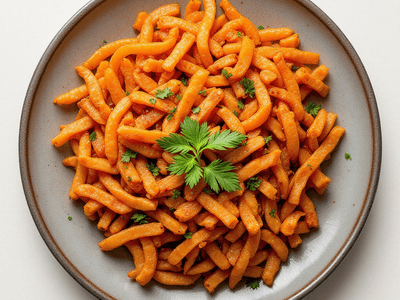
Rojak
Hawker • Singapore
About Rojak
Mixed fruit and vegetable salad with shrimp paste sauce
How to Make Rojak (Traditional & Healthy Version)
Rojak is a beloved Singaporean snack that truly embodies the nation's multicultural spirit. Found in many kopitiams and hawker centres, this vibrant salad is a medley of fresh fruits and vegetables tossed in a uniquely aromatic, sweet, and tangy sauce. The word 'rojak' actually means 'mixture' in Malay, reflecting Singapore’s fusion of cultures and cuisines. This dish is a delightful explosion of flavours and textures, making it a favourite among locals and a must-try for visitors. Rojak’s roots run deep in Singaporean hawker culture, where stallholders have perfected their own secret sauces and ingredient combinations over generations. A healthy, vegetarian option, it is perfect for those seeking a light yet flavourful snack or side dish. This recipe keeps calories in check by using a lighter hand with the sauce and focusing on nutrient-dense, crunchy produce. Enjoy the taste of Singapore’s food heritage with this easy-to-prepare, wholesome version of Rojak.
Ingredients(for 1 medium plate (approx. 300g per serving))
- 1 cup Cucumber (peeled and sliced (timun))
- 1 cup Pineapple (cut into bite-sized chunks (nanas))
- 1 cup Jicama (peeled and thinly sliced (bangkuang))
- 1/2 cup Firm tofu (lightly pan-fried (tau kwa))
- 1/2 cup Bean sprouts (blanched)
- 1 stick You tiao (cut into 2cm pieces; use baked for healthier option)
- 2 tbsp Roasted peanuts (coarsely ground)
- 2 tbsp Fresh coriander (chopped) - optional
- 1/4 cup Rojak sauce (see below for healthy sauce recipe)
- 1 tsp Sesame seeds (toasted) - optional
Instructions
- 1
Prepare the vegetables and fruit: Wash, peel, and cut cucumber, pineapple, and jicama into bite-sized pieces. Blanch bean sprouts briefly in boiling water and set aside.
5 minutes
Keep the vegetables crunchy by not over-blanching.
- 2
Pan-fry the firm tofu (tau kwa) with minimal oil until golden on both sides. Slice into 2cm cubes.
5 minutes
Use a non-stick pan to reduce oil usage.
- 3
Slice the you tiao into 2cm pieces. For a healthier version, use baked you tiao or air-fry until crisp.
3 minutes
If using fresh you tiao, lightly toast in oven to reduce oil.
- 4
In a small bowl, mix the healthy rojak sauce: 2 tbsp reduced-sugar prawn paste (vegetarian version: use fermented soybean paste), 1 tbsp lime juice (limau nipis), 1 tsp palm sugar (gula melaka) or honey, and 1 tsp tamarind paste. Whisk until smooth.
3 minutes
Adjust sauce sweetness and tanginess to taste.
Why This Dish is Healthy
Rojak is a healthy choice because it emphasizes whole, minimally processed ingredients with plenty of fresh produce. The sauce is made lighter and lower in sugar, while baked you tiao and pan-fried tofu cut down on unnecessary fats. This nutrient-rich combination supports digestive health, boosts immunity, and keeps you full with fiber and protein. Perfect for calorie counters, vegetarians, and anyone seeking a guilt-free taste of Singaporean cuisine.
This homemade Rojak is packed with fiber, vitamins, and minerals thanks to the variety of fresh fruits and vegetables used. Jicama and cucumber provide hydration and vitamin C, while pineapple adds antioxidants and digestive enzymes. Tofu offers plant-based protein, making this dish satisfying and nourishing. The use of roasted peanuts and sesame seeds boosts healthy fats and micronutrients like magnesium and vitamin E. By limiting added sugars and oil, this Rojak is naturally lower in calories and saturated fat compared to typical hawker versions.
Pro Tips
- 💡Tip 1: Always toss Rojak just before serving to keep the ingredients crisp.
- 💡Tip 2: Toast peanuts and sesame seeds for extra aroma and flavor.
- 💡Tip 3: Adjust sauce sweetness and tanginess to your preference for a personalized touch.
Storage & Serving
Rojak is best eaten fresh, but leftovers can be stored in an airtight container in the refrigerator for up to 1 day. Store the sauce separately and toss just before serving to maintain the crisp texture.
Best served: Breakfast or Lunch
Nutrition Facts
| Nutrient | Per 100g |
|---|---|
| Energy | 320.0 kcal |
| Protein | 8.0 g |
| Carbohydrates | 35.0 g |
| Total Fat | 18.0 g |
| Fiber | 5.0 g |