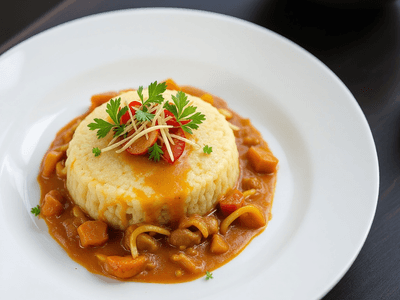
Ketupat and Rendang
Lunch • Singapore
How to Make Ketupat and Vegetarian Rendang (Traditional & Healthy Version)
Ketupat and Rendang is an iconic pairing in Singaporean cuisine, enjoyed especially during festive seasons but also found year-round in local kopitiams and hawker centres. Ketupat, a compressed rice cake wrapped in woven coconut leaves, is beloved for its soft and chewy texture, making it the perfect base for flavorful rendang. While classic rendang is often made with meat, this vegetarian version highlights the fusion influences of Singapore’s multicultural food scene, using hearty mushrooms, tempeh, and tofu to achieve a satisfying, umami-rich gravy without compromising on authenticity or taste. Singapore’s vibrant hawker culture celebrates diverse flavors and traditions, and vegetarian rendang is increasingly popular among health-conscious diners. With its fragrant blend of lemongrass, galangal, coconut milk, and spices, this dish delivers robust taste while being suitable for a wide range of diets. It’s a great choice for those seeking a wholesome, plant-based meal that’s high in fiber and packed with local flavor. Perfect for lunch or as a light festive meal, this dish embodies the communal spirit and innovative fusion that defines Singaporean cuisine.
Ingredients(for 1 portion ketupat (about 120g) with 1 cup vegetarian rendang)
- 1 cup Uncooked jasmine rice (for ketupat)
- 2 pieces Woven coconut leaves (daun ketupat) (available at wet markets)
- 100g Firm tofu (cubed)
- 100g Tempeh (cubed)
- 100g Shiitake mushrooms (fresh, sliced)
- 200ml Coconut milk (light) (use low-fat for healthier option)
- 3 Shallots (peeled)
- 3 Garlic cloves (peeled)
- 2 Fresh red chili (seeded for less heat) - optional
- 1 Lemongrass stalk (white part only, minced)
- 1 inch Galangal (sliced)
- 1 tsp Ground coriander
- 1/2 tsp Turmeric powder
- 2 Kaffir lime leaves (torn for aroma) - optional
- to taste Salt
- 1 tbsp Cooking oil (preferably canola or sunflower)
Instructions
- 1
Rinse the jasmine rice thoroughly. Fill each coconut leaf pouch (daun ketupat) half full with rice, then secure tightly.
5 minutes
Do not overfill the pouches as rice will expand during cooking.
- 2
Boil a large pot of water. Submerge the ketupat pouches and simmer for 1 hour until rice is fully cooked and compact. Remove and let cool.
10 minutes (active), 1 hour (passive)
Weigh down ketupat with a plate to keep submerged.
- 3
Blend shallots, garlic, chili, lemongrass, galangal, coriander, and turmeric with a splash of water to form a spice paste.
5 minutes
Use a mortar and pestle for a more aromatic paste.
- 4
Heat oil in a wok and sauté the spice paste until fragrant, about 2-3 minutes.
3 minutes
Stir constantly to avoid burning the paste.
Why This Dish is Healthy
Opting for a vegetarian version of Ketupat and Rendang cuts down on cholesterol and saturated fats typically found in meat rendang, making it suitable for weight management and heart health. The use of whole foods, minimal oil, and plenty of spices ensures you get flavor without unnecessary calories. Plus, the dish is naturally low in sugar and free from processed ingredients, making it an ideal healthy lunch for those tracking their intake.
This vegetarian Ketupat and Rendang is high in dietary fiber and plant-based protein, thanks to tofu, tempeh, and mushrooms. The use of light coconut milk reduces saturated fat, making this dish heart-friendly. You’ll benefit from vitamins like B12 (from tempeh), iron, and antioxidants from aromatic spices such as turmeric, galangal, and coriander. The moderate carbohydrate content from the ketupat provides sustained energy, making this dish nutritionally balanced for lunch.
Pro Tips
- 💡Tip 1: Prep spice paste ahead and freeze in small portions for quick cooking.
- 💡Tip 2: Use day-old rice for firmer ketupat texture.
- 💡Tip 3: Simmer rendang sauce slowly to intensify flavors.
Storage & Serving
Store leftover ketupat in the fridge in an airtight container for up to 2 days. Vegetarian rendang keeps well for 3 days refrigerated; reheat gently before serving. Avoid freezing ketupat as texture may change.
Best served: Breakfast or Lunch
Nutrition Facts
| Nutrient | Per 100g |
|---|---|
| Energy | 250.0 kcal |
| Protein | 8.0 g |
| Carbohydrates | 25.0 g |
| Total Fat | 9.0 g |
| Fiber | 2.0 g |