Pork Intestine Congee
Hawker • Singapore
How to Make Pork Intestine Congee (Traditional & Healthy Version)
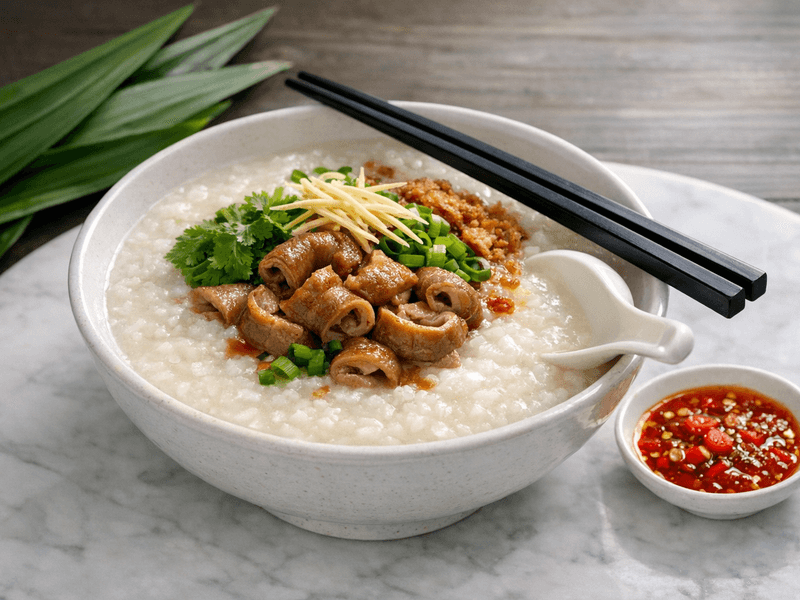
Pork Intestine Congee is a beloved staple in Singapore’s vibrant hawker culture, often found steaming at local kopitiams and food centres. This dish is renowned for its silky rice porridge base, tender pork intestine slices, and a medley of aromatic toppings. Its roots trace back to Chinese communities in Singapore, where congee is not just comfort food but also a nutritious meal enjoyed across generations. The recipe has evolved to embrace fusion influences, incorporating local flavors like fried shallots, spring onions, and a dash of white pepper for extra warmth. The taste is a harmonious blend of savory broth, creamy rice, and the unique texture of pork intestines, which are delicately cleaned and simmered to perfection. It’s a popular lunch option for busy Singaporeans, offering both sustenance and satisfaction. As a health-conscious adaptation, this recipe uses lean pork, minimal oil, and a generous serving of vegetables, making it suitable for calorie tracking and those seeking a balanced meal. Whether you’re craving a nostalgic kopitiam experience or a nutritious midday meal, Pork Intestine Congee is a great choice that celebrates Singapore’s culinary heritage.
Ingredients(for 1 medium bowl per person, typical Singaporean portion)
- 1/2 cup Jasmine rice (short-grain preferred)
- 150g Pork intestine (cleaned and blanched)
- 80g Lean pork slices (optional for added protein) - optional
- 4 cups Low sodium chicken stock (homemade or store-bought)
- 1 thumb-sized piece Ginger (sliced)
- 2 stalks Spring onions (finely chopped)
- 2 tbsp Fried shallots (for garnish)
- 1/2 tsp White pepper powder (to taste)
- 1 tbsp Light soy sauce (for seasoning)
- 1 tsp Sesame oil (for aroma)
Instructions
- 1
Rinse jasmine rice under running water until water runs clear. Soak for 10 minutes to soften grains.
10 minutes
Soaking rice ensures a smoother congee texture.
- 2
Prepare pork intestines by cleaning thoroughly, blanching in boiling water with ginger for 5 minutes to remove odors.
5 minutes
Use ginger in blanching to neutralize any strong smells.
- 3
In a large pot, combine soaked rice, chicken stock, and sliced ginger. Bring to boil, then reduce heat to simmer.
5 minutes
Stir occasionally to prevent sticking.
- 4
Add cleaned pork intestine and optional lean pork slices to the simmering congee. Cook until rice breaks down and intestines are tender.
15 minutes
Cover pot for faster cooking and creamier consistency.
Why This Dish is Healthy
By using lean cuts, limiting oil, and incorporating fresh vegetables, this congee supports a healthy lifestyle for Singaporeans. It’s low in saturated fat and high in protein, making it suitable for weight management and muscle recovery. The inclusion of ginger aids digestion, while the use of local aromatics enhances flavor without excessive calories.
This Pork Intestine Congee provides a good balance of protein from pork, complex carbohydrates from jasmine rice, and micronutrients from ginger and spring onions. Lean pork and intestine are sources of iron, zinc, and B vitamins. Using low sodium chicken stock and minimal oil reduces saturated fat and sodium, supporting heart health. The dish is also easy to digest and ideal for those seeking a nutrient-rich, filling meal.
Pro Tips
- 💡Tip 1: Thoroughly clean pork intestines for best taste and texture.
- 💡Tip 2: Use fresh ginger to neutralize odors and enhance aroma.
- 💡Tip 3: Stir congee regularly for a silky, lump-free consistency.
Storage & Serving
Store leftover congee in an airtight container in the refrigerator for up to 2 days. Reheat gently, adding a splash of water to restore creamy texture.
Best served: Breakfast or Lunch
Nutrition Facts
| Nutrient | Per 100g |
|---|---|
| Energy | 310.0 kcal |