Pandan Kuih Lapis Cake
Hawker • Singapore
How to Make Pandan Kuih Lapis Cake (Traditional & Healthy Version)
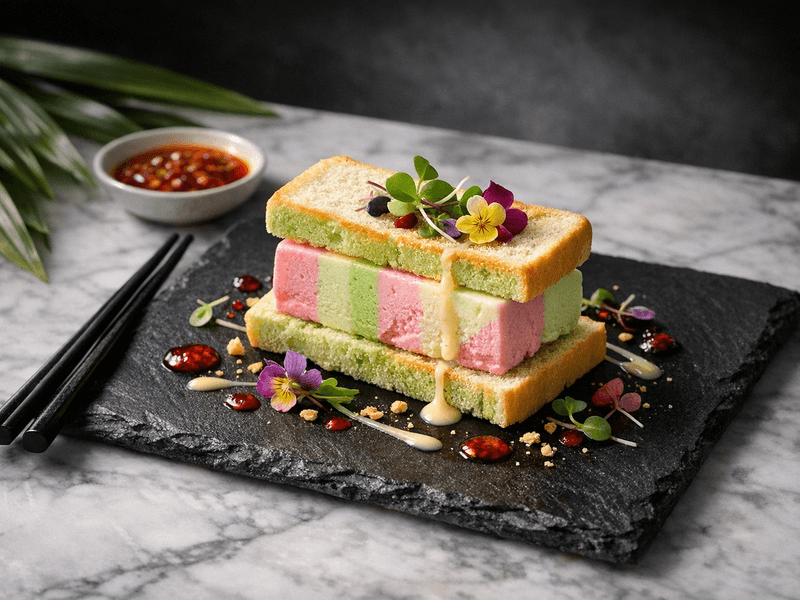
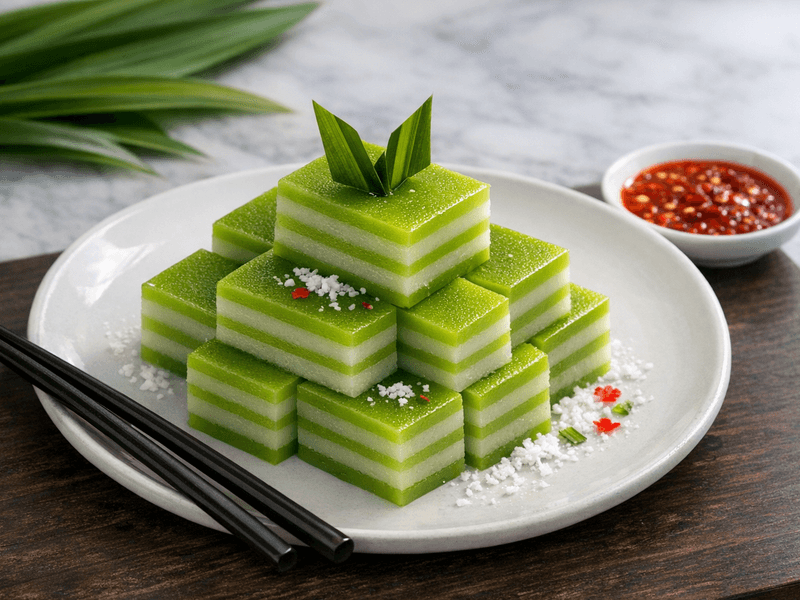
Pandan Kuih Lapis Cake is a beloved dessert in Singapore, often found at local hawker centres and kopitiams. This colourful layered cake, made with fragrant pandan and coconut milk, is a staple at gatherings, festive occasions, and as a nostalgic treat for many Singaporeans. The name 'kuih lapis' translates to 'layered cake', with each layer painstakingly steamed to achieve a delicate, chewy texture. Its roots are deeply embedded in Southeast Asian culture, but Singapore's version reflects the unique fusion influences and vibrant food scene found across the island. The cake’s aroma of pandan leaves, combined with the creamy coconut notes, makes it irresistible—a true reflection of Singapore’s tropical palate. Pandan Kuih Lapis is not just visually appealing, but also subtly sweet and satisfying, perfect for those seeking a lighter dessert option. It’s a vegetarian-friendly recipe that resonates with Singapore’s multicultural heritage, and its popularity at hawker stalls and kopitiams highlights its significance in everyday life. Choosing Pandan Kuih Lapis as your dessert means indulging in a slice of Singaporean tradition, while enjoying a healthier, homemade version tailored for calorie-conscious food lovers.
Ingredients(for 1 generous slice per serving (about 100g))
- 1/2 cup Rice flour (local staple for kuih)
- 1/4 cup Tapioca flour (adds chewy texture)
- 1 cup Coconut milk (light) (use 'santan' for local flavour)
- 1/4 cup Pandan juice (freshly blended pandan leaves)
- 4 tbsp Stevia or low-calorie sweetener (healthier sugar alternative)
- 1/2 cup Water
- 1/4 tsp Salt
- few drops Natural food colouring (optional) (to create layers) - optional
- 1 tsp Vegetable oil (to grease pan)
Instructions
- 1
Blend pandan leaves with water to extract pandan juice. Strain for a vibrant green liquid.
5 minutes
Use mature pandan leaves for stronger aroma.
- 2
In a mixing bowl, combine rice flour, tapioca flour, coconut milk, stevia, salt, and water. Stir until smooth.
5 minutes
Avoid lumps for a smooth kuih texture.
- 3
Divide batter into two bowls. Add pandan juice to one bowl for green layer. Add natural colouring to the other if desired.
3 minutes
Use natural food colouring for a healthier option.
- 4
Grease a small square pan with vegetable oil. Pour a thin layer of coloured batter and steam for 3 minutes.
3 minutes
Cover pan with a lid for even steaming.
Why This Dish is Healthy
By swapping traditional sugar with stevia and using light coconut milk, this kuih lapis recipe is lower in calories, fat, and sugar. The use of pandan juice not only enhances flavor but also adds natural antioxidants. It’s a healthier dessert choice for Singaporeans who want to enjoy hawker favourites without compromising their wellness goals.
Pandan Kuih Lapis Cake is naturally gluten-free and vegetarian. Using light coconut milk and stevia reduces saturated fat and sugar, making it suitable for calorie-conscious diets. Rice and tapioca flours provide complex carbohydrates, while pandan juice offers antioxidants. Coconut milk delivers potassium and magnesium, aiding hydration and heart health. This recipe avoids artificial additives, focusing on clean, local ingredients.
Pro Tips
- 💡Tip 1: Use fresh pandan leaves for authentic flavour.
- 💡Tip 2: Allow kuih lapis to cool completely before slicing to avoid sticky layers.
- 💡Tip 3: Steam each layer evenly to achieve perfect, distinct stripes.
Storage & Serving
Store kuih lapis in an airtight container in the refrigerator for up to 3 days. Bring to room temperature before serving for best texture.
Best served: Breakfast or Lunch
Nutrition Facts
| Nutrient | Per 100g |
|---|---|
| Energy | 180.0 kcal |