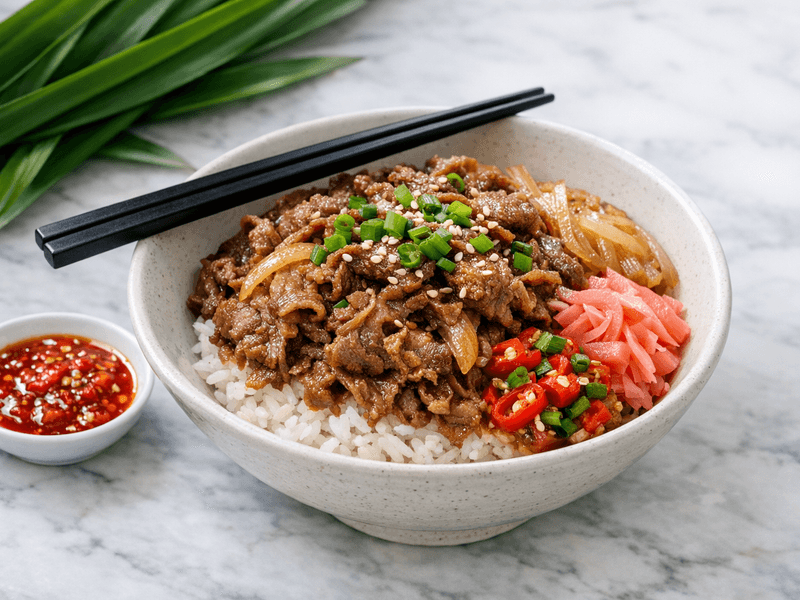
Gyudon (japanese Beef Bowl)
Hawker • Singapore
How to Make Vegetarian Gyudon (Japanese Beef Bowl) – Traditional & Healthy Singapore Fusion
Vegetarian Gyudon, a plant-based twist on the beloved Japanese beef bowl, has become a popular lunch option in Singapore’s vibrant kopitiam and hawker centres. This hearty rice bowl blends tender marinated mushrooms and tofu atop fluffy white rice, bathed in a savoury-sweet sauce. Singaporeans love fusion food, and this dish is a prime example of how global flavours meet local tastes. With a focus on health and local ingredients, our version maintains the classic umami notes while substituting beef with nutritious, accessible alternatives. In Singapore, where kopitiam culture thrives, vegetarian variations of international favourites are sought after for both health and religious reasons. This vegetarian Gyudon is not only satisfying but also lighter, making it a smart choice for those tracking calories or seeking more plant-based meals. The subtle sweetness from mirin, the savoury depth from soya sauce, and the aroma of caramelised onions are balanced perfectly, evoking the comforting essence of a traditional Gyudon with a Singaporean vegetarian twist.
Ingredients(for 1 kopitiam rice bowl (about 350g per serving))
- 1 cup Short-grain rice (Japanese rice or local calrose)
- 200g Firm tofu (cubed)
- 150g Fresh shiitake mushrooms (sliced)
- 1 medium Yellow onion (thinly sliced)
- 3 tbsp Low-sodium soya sauce (use local brands)
- 1 tbsp Mirin (or use sweet rice wine substitute)
- 3/4 cup Vegetable or mushroom stock (no MSG)
- 1 tsp Sugar (can substitute with erythritol for lower calorie)
- 2 stalks Spring onion (finely chopped)
- 2 tbsp Pickled ginger (beni shoga) (for garnish) - optional
Instructions
- 1
Rinse and cook the rice in a rice cooker or pot until fluffy. Set aside.
15 minutes
Use local calrose rice for a stickier texture similar to Japanese rice.
- 2
Pat tofu dry, cut into small cubes, and pan-fry with a touch of oil until golden on all sides. Remove and set aside.
5 minutes
Ensure tofu is well-drained for best texture.
- 3
In the same pan, sauté onions over medium heat until translucent and slightly caramelised.
5 minutes
Slow cooking releases the onion’s natural sweetness.
- 4
Add sliced shiitake mushrooms and cook until tender.
3 minutes
Do not overcrowd the pan for even browning.
Why This Dish is Healthy
Opting for a vegetarian Gyudon reduces overall calories and saturated fat, making it a heart-friendly lunch. Plant-based proteins are easier to digest and beneficial for cholesterol levels. The inclusion of mushrooms and tofu enhances satiety without excess calories. This dish is also free from heavy oils and MSG, aligning with clean eating trends popular in Singapore’s health-conscious community.
This vegetarian Gyudon is high in plant-based protein from tofu and mushrooms, and low in saturated fat compared to traditional beef versions. Shiitake mushrooms provide dietary fibre, B vitamins, and minerals like selenium and copper. Onions supply antioxidants, while spring onions add vitamin K and C. Using low-sodium soya sauce keeps sodium levels in check, supporting heart health. Served with rice for complex carbohydrates, this meal is balanced and nutrient-dense.
Pro Tips
- 💡Tip 1: For added umami, add a dash of mushroom seasoning (MSG-free).
- 💡Tip 2: Swap shiitake for king oyster mushrooms for a meatier texture.
- 💡Tip 3: Prepare rice and toppings ahead for a quick weekday lunchbox.
Storage & Serving
Refrigerate leftovers in an airtight container for up to 2 days. Reheat gently in a microwave or on the stove, adding a splash of water to keep the sauce moist.
Best served: Lunch
Nutrition Facts
| Nutrient | Per 100g |
|---|---|
| Energy | 550.0 kcal |