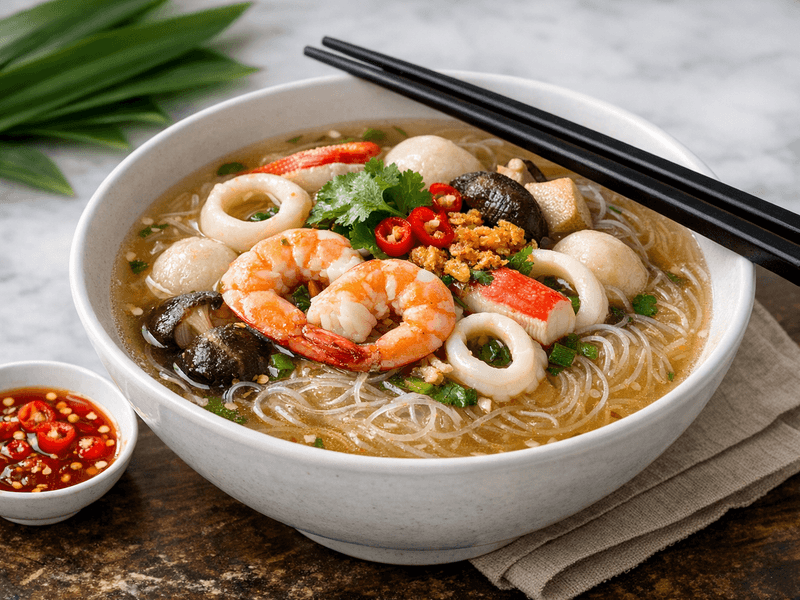
Tang Hoon Soup with Seafood
Lunch • Singapore
How to Make Tang Hoon Soup with Seafood (Traditional & Healthy Version)
Tang Hoon Soup with Seafood is a beloved dish across Singapore, often savored at bustling hawker centres and kopitiams. This light yet flavorful noodle soup showcases the unique qualities of tang hoon (glass noodles), which are prized for their silky texture and ability to absorb the essence of the broth. The addition of fresh seafood elevates the dish, providing a rich, umami depth while keeping it nutritious and lower in calories. Singapore’s multicultural food heritage shines through in this recipe, blending Chinese technique with Southeast Asian ingredients, resulting in a comforting meal that’s both wholesome and satisfying. Known for its clear, aromatic broth and delicate seafood flavors, Tang Hoon Soup is a favorite for lunch among locals seeking a light yet protein-rich meal. It’s commonly found in heartland food courts, as well as trendy cafes that offer healthier versions to cater to calorie-conscious Singaporeans. As the dish gets a fusion twist, local veggies such as bok choy and shiitake mushrooms are added for extra nutrition and taste. This healthy Singaporean recipe is ideal for anyone tracking their calories, wanting a balanced meal that captures the essence of Singapore’s hawker culture.
Ingredients(for 1 kopitiam bowl per person)
- 100g Tang hoon (glass noodles) (mung bean vermicelli)
- 4 cups Vegetable stock (homemade or low-sodium)
- 8 pieces Medium prawns (peeled and deveined)
- 100g Squid (cleaned and sliced)
- 1 block Tofu (silken or firm, cubed)
- 2 heads Bok choy (chopped)
- 4 pieces Shiitake mushrooms (fresh, sliced)
- 1 small Carrot (julienned)
- 2 cloves Garlic (minced)
- 1/2 tsp White pepper (freshly ground)
- 1 tbsp Light soy sauce (optional, for flavor) - optional
- 2 stalks Spring onions (chopped, for garnish)
Instructions
- 1
Soak tang hoon in warm water for 10 minutes until softened, then drain.
10 minutes
Do not over-soak to keep noodles springy.
- 2
Heat a pot, add minced garlic, and sauté until fragrant.
2 minutes
Use minimal oil or a non-stick pot for a healthier version.
- 3
Pour in vegetable stock and bring to a gentle boil.
3 minutes
Use homemade stock for richer flavor and less sodium.
- 4
Add mushrooms, carrot, and bok choy. Simmer until vegetables are tender.
5 minutes
Add bok choy last to retain crispness.
Why This Dish is Healthy
This dish uses lean seafood and tofu for protein, and loads up on vegetables for vitamins and minerals. The clear broth is low in calories and sodium, especially when made with homemade vegetable stock. Glass noodles are gluten-free and lighter than wheat-based noodles, making Tang Hoon Soup with Seafood a smart choice for lunch or a light dinner. It’s filling, nourishing, and supports a healthy lifestyle for Singaporeans.
Tang Hoon Soup with Seafood is naturally low in fat and high in protein, especially with the inclusion of prawns, squid, and tofu. The glass noodles are gluten-free and provide moderate carbohydrates, while vegetables like bok choy and carrots add fiber, vitamins A and C, and minerals such as potassium. Shiitake mushrooms further boost immune-supporting nutrients. This balanced meal is ideal for calorie-conscious eaters, offering a good mix of macronutrients and micronutrients.
Pro Tips
- 💡Tip 1: Use fresh seafood from wet markets for best flavor.
- 💡Tip 2: Prep all ingredients before cooking to ensure a smooth workflow.
- 💡Tip 3: Adjust broth seasoning just before serving for perfect balance.
Storage & Serving
Store leftovers in an airtight container in the fridge for up to 2 days. Reheat gently to avoid overcooking seafood and noodles.
Best served: Breakfast or Lunch
Nutrition Facts
| Nutrient | Per 100g |
|---|---|
| Energy | 280.0 kcal |